

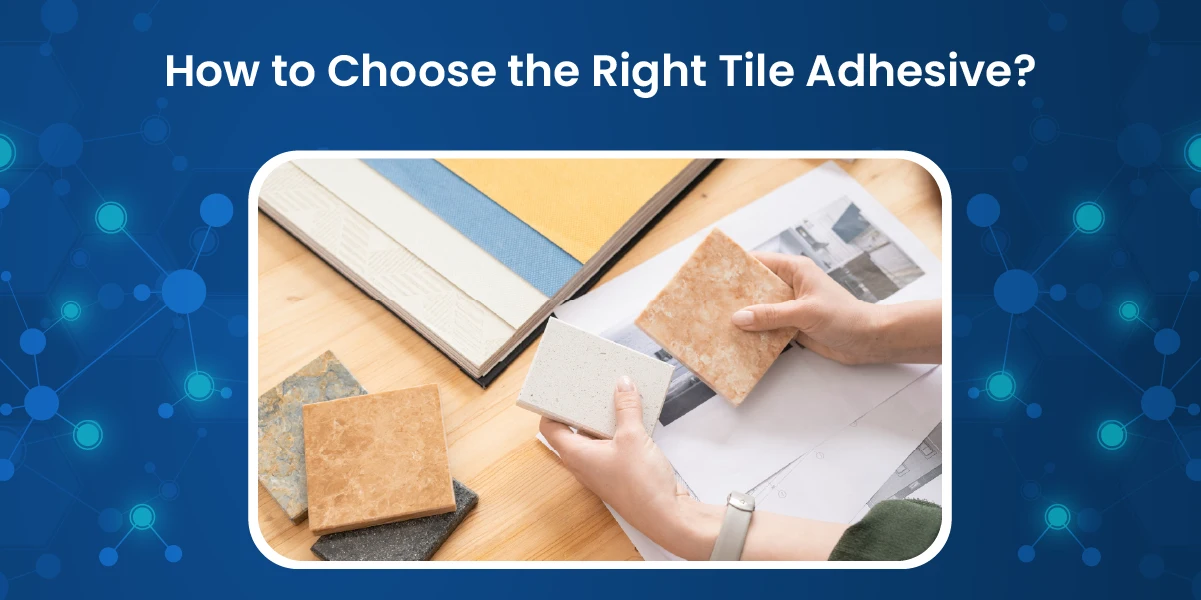
You’ve finally decided to renovate. Maybe it’s a fresh bathroom, a smarter kitchen backsplash, or new flooring in the living room. The tiles are chosen, the contractor is booked, and the plan feels complete. Yet one crucial decision is usually left to last: the adhesive that will actually hold everything together.
In Indian homes, this choice quietly decides whether tiles stay firm for years or start sounding hollow and coming loose after a couple of monsoons. Considering the mix of humidity, heat, and temperature swings in India, the right polymer-based, customised adhesive isn’t optional; it’s essential for long-term durability. In this guide, we’ll understand how to choose the right tile adhesive for your home.
A] Understanding Tile Adhesives: What They Are and Why They Matter
A tile adhesive is a bonding compound, either powder-based or a ready-to-use paste, engineered to permanently fix tiles to a surface. Inside that bag is a precise blend of Portland cement, graded fillers, and polymer modifiers. Those polymers are what truly matter. They improve flexibility, reduce shrinkage during curing, and grip both tile and substrate far more reliably than traditional sand-cement mortar ever could.
This foundational knowledge directly shapes the process of choosing the right tile adhesive for specific applications, from dry home interiors to high-moisture kitchens and bathrooms. The forces acting on a kitchen wall tile differ vastly from those on a bathroom floor. One product cannot responsibly serve both. And it shouldn’t have to.
B] Types of Tile Adhesives Available in India
Not all adhesives are created equal. Understanding the different types available in the market is the next step in mastering how to choose the right tile adhesive.
1. Cement-Based Adhesives
These are the most commonly used adhesives in India. They are economical and suitable for standard applications like ceramic tiles.
Best For: Home/kitchen walls and floors.
2. Epoxy-Based Adhesives
These high-quality adhesives are resistant to both chemicals and water.
Best For: Bathroom floors, industrial kitchens, and heavy-duty areas.
3. Ready-Mix Adhesives
These are ready-to-go and can be used for DIY projects and quick renovations.
Best For: Interior walls and small home upgrades.
4. Polymer-Modified Adhesive
These adhesives contain advanced polymers that enhance bonding strength and flexibility.
Best For: Large-format tiles, exteriors, balconies, and high-moisture areas.
Quick Comparison Table
| Type of Adhesive | Strength Level | Water Resistance | Best For |
| Cement-Based | Medium | Moderate | Home/Kitchen |
| Epoxy-Based | Very High | Excellent | Bathroom/Exteriors |
| Ready-Mix | Low-Medium | Moderate | Interior Walls/Home |
| Polymer-Modified | High | High | Kitchen/Bathroom/Exterior |
Choosing between these types becomes easier once you understand your application. This clarity is essential when deciding how to choose the right tile adhesive.
C] 5 Essential Factors for Choosing the Right Adhesive
Selecting the right adhesive isn’t guesswork; it’s a technical decision. If you truly want to master how to choose the right tile adhesive, focus on these critical factors:
1. Tile Porosity & Material
Not all tiles perform the same way. Ceramic tiles are more porous and easier to fix, while vitrified and glass tiles are denser and need stronger adhesives.
When choosing the right tile adhesive for use at home, consider the tile first. For example, vitrified tiles demand polymer-modified adhesives for better grip.
2. Substrate Stability
What surface are you tiling on? Whether it’s concrete, drywall, or old tiles, each substrate behaves differently.
Unstable or uneven surfaces require flexible adhesives. This is especially important when choosing the right tile adhesive for the kitchen, where walls may expand due to heat.
3. Specific Room Requirements
Different spaces demand different properties; this is where most homeowners go wrong.
- Kitchen: Heat resistance and stain protection are crucial. Oil splashes and high temperatures can weaken ordinary adhesives.
- Bathroom: Waterproofing and anti-fungal properties are non-negotiable. Always prioritise these when learning how to choose the right tile adhesive for the bathroom.
Ignoring these factors leads to costly repairs.
4. Environmental Exposure
Is the area indoors or exposed to the weather? Exterior tiles face rain, UV rays, and temperature fluctuations.
For balconies or terraces, always opt for polymer-modified adhesives. This is a key consideration when choosing the right tile adhesive for your home in Indian climates.
5. Pot Life & Open Time
Contractors often emphasise this, but homeowners ignore it. Pot life refers to how long the adhesive remains usable after mixing, while open time indicates how long it can hold tiles effectively.
Choosing the right balance ensures proper tile placement without rushed work. Professionals always factor this in when deciding how to choose the right tile adhesive.
D] Common Mistakes to Avoid and Best Practices
Even experienced contractors get this wrong. Here are the most critical errors seen regularly on Indian tiling projects:
- Using cement mortar instead of tile adhesive. Sand-cement mortar is thick, uneven, and shrinks as it cures, three properties that actively work against tile bonding. Modern tile adhesives are engineered to bond; mortar is not.
- Ignoring tile size. Large-format tiles (600×600 mm and above) require adhesives with a longer open time and higher flexibility. Using a standard product on large tiles invites hollow spots and eventual cracking.
- Using wall adhesive on floors. Wall adhesives are formulated for vertical application. Applying them underfoot results in inadequate compressive strength; they will fail under foot traffic.
- Not checking surface compatibility. Dusty, oily, or damp substrates will compromise any adhesive’s bond, regardless of product quality. Surface cleaning, priming, and levelling are as important as adhesive selection.
- Choosing cheaper products with poor bonding strength. In India’s price-sensitive market, there is a persistent temptation to cut costs on adhesives. This is short-sighted. Re-tiling a bathroom costs ten times more than using the right product the first time.
Expert tip: Always conduct a pull-off or tap test 24 hours after laying a few tiles. A hollow sound indicates inadequate contact; catch it early before the whole area is set.
E] How Polymer Technology Improves Tile Adhesive
Modern adhesives are not just cement-based; they contain advanced polymer emulsions in them. Here’s how polymer technology transforms performance:
- Improves the strength of bonding for long-lasting adhesion
- Adds flexibility to handle structural movement
- Enhances water resistance for wet areas
- Reduces cracking and tile debonding
If you prioritise durability, polymer-modified adhesives are essential when choosing the right tile adhesive for the bathroom and exterior spaces.
For tailored solutions, contact us or visit the Soham Polymers website.
Conclusion
Choosing the right tile adhesive is equally important to choosing the tile itself. Investing in the right product means you are protected from hollows, cracks, leakages, or premature breakdown, particularly in the Indian climate of heat, moisture, and temperature swings. By matching the right adhesive types with tile material, room usage, substrate, and exposure, you can rest assured of long-lasting performance across kitchens, bathrooms, balconies, and living spaces. Using high-quality and polymer-modified adhesives over cheaper options would save you from future costly repairs. For expert guidance and customised adhesive solutions tailored to your project, connect with us and build surfaces that stay beautiful and secure for years.